

From an unlawful detention inside his own home to a federal courtroom victory, Slade Douglas's fight for justice is a powerful story of perseverance, accountability, and refusing to be silenced.
There are victories that change a person's life, and then there are victories that send a message far beyond the courtroom.
For military veteran and civil rights advocate Slade Douglas, his nearly $6.8 million federal court judgment against the City of Los Angeles and LAPD officers represents far more than a financial award. It is a hard-fought victory after years of seeking accountability for an encounter that challenged his constitutional rights, his dignity, and his trust in the very system sworn to protect him.
Douglas didn't simply challenge a powerful institution. He stood his ground, took his fight to federal court, and won. And when that victory was challenged, the court refused to set it aside.
For a man who once served his country, the outcome carries a powerful message: No one is above the law, and no one's constitutional rights should be treated as optional.

From Serving His Country to Fighting for His Rights
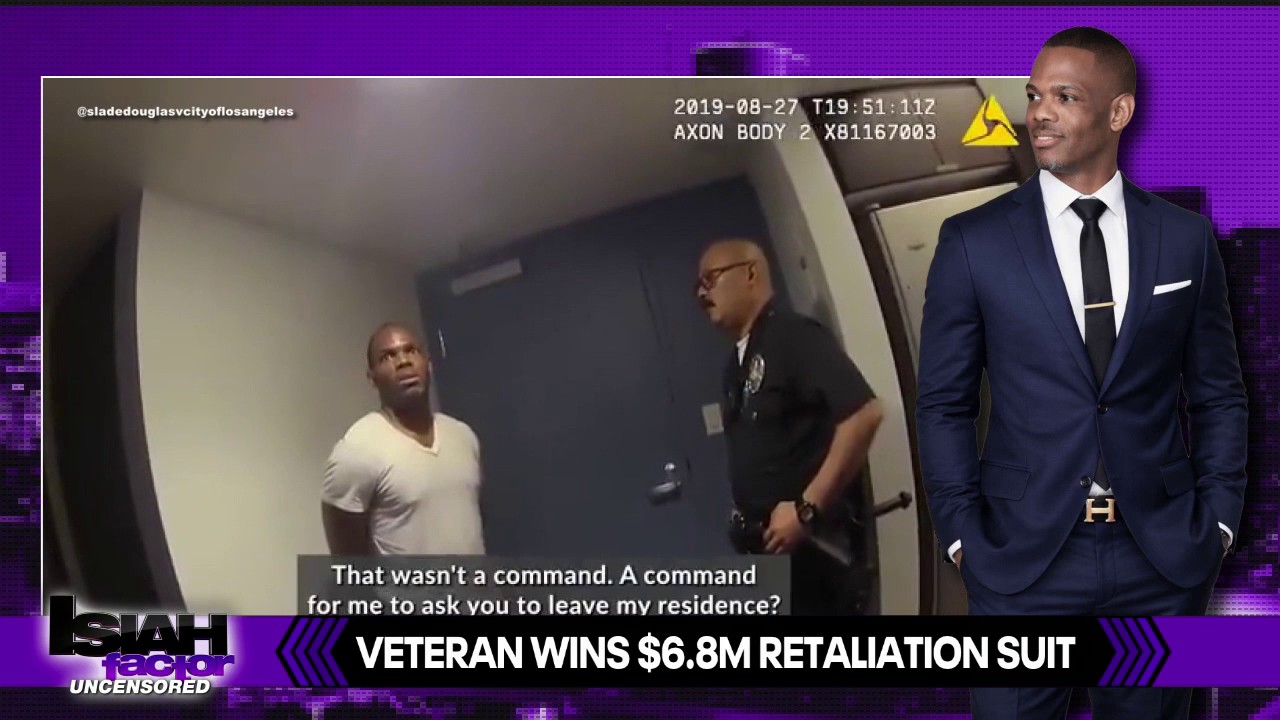
On August 27, 2019, Douglas's life took an unexpected turn following a call to a Veterans Affairs crisis hotline.
According to his account of the incident, LAPD officers arrived at his Los Angeles residence after VA personnel initiated a law enforcement response. What should have been an opportunity to provide assistance instead escalated into a confrontation that would eventually become the foundation of a federal civil rights lawsuit.
Douglas, a Black military veteran, maintained that he was neither a danger to himself nor a threat to anyone else. He initially welcomed officers into his home, expecting a respectful interaction.
However, as the encounter progressed, Douglas said the officers became condescending. Uncomfortable with their conduct, he asked them to leave and contacted 911 to report what was happening.
Rather than leaving, officers detained Douglas, searched his home, and restrained him to a stretcher, according to his account.
Imagine being inside your own home, explaining that you pose no threat, only to find yourself restrained by the very people expected to protect you.
For Douglas, that experience became the beginning of a much larger fight.
But he wasn't willing to let the encounter become the final chapter of his story.
He wanted answers. He wanted accountability. And most importantly, he wanted justice.
The Verdict That Changed Everything
After years of pursuing his case, Douglas achieved a significant legal victory when a federal jury awarded him approximately $6.6 million in compensatory damages in his civil rights lawsuit.
The verdict was a major moment in his pursuit of accountability, demonstrating that individuals can successfully challenge the actions of law enforcement officers and government institutions through the courts.
But Douglas's victory did not end with the jury's decision.
The final judgment totaled approximately $6.789 million, including punitive damages. The defendants subsequently sought to challenge the outcome, requesting a new trial or relief from the judgment.
Then came another defining moment.
On August 26, 2026, a federal judge denied the defendants' request for a new trial, leaving the multimillion-dollar damages award intact.
It was another major victory for Douglas, reinforcing the outcome of a legal battle that had stretched across several years.
The court also awarded more than $1.7 million in attorneys' fees and costs, separate from the damages judgment.
For Douglas, the result represented something much greater than a dollar amount.
It was a moment of legal vindication.
His claims had been heard, a jury had delivered its verdict, and a subsequent attempt to overturn that outcome had been rejected.
What began as an encounter inside his home had resulted in a substantial federal court victory.
A Victory That Speaks Volumes
There is something particularly powerful about Douglas's story.
As a veteran, he served a nation whose Constitution promises protections against unlawful government intrusion. Yet years after his military service, he found himself fighting to enforce those protections in his own life.
His case highlights an important reality: Constitutional rights belong to everyone, regardless of race, background, military status, or circumstances.
And when those rights are violated, accountability matters.
For Black Americans, particularly Black men, Douglas's victory resonates within a much broader national conversation surrounding policing, civil liberties, and equal protection under the law.
Too often, stories involving alleged police misconduct focus on the incident itself, leaving little room to recognize the individuals who successfully pursue justice afterward.
Douglas's story offers a different perspective.
It is not solely about what happened to him.
It is about what he did next—and the victory he achieved.
He challenged the conduct of law enforcement officers, pursued his claims through the federal court system, and secured a judgment that survived a subsequent legal challenge.
His determination is a reminder that powerful institutions can be held accountable and that individuals have the right to seek legal remedies when their constitutional protections are violated.
The Veteran They Tried to Silence
Douglas's journey is also the focus of the documentary Slade Douglas v. City of Los Angeles – The Veteran They Tried to Silence.
The documentary places his experience and legal battle at the center of a larger discussion about civil rights, government accountability, and the treatment of military veterans.
Beyond the courtroom proceedings and multimillion-dollar figures is a human story about perseverance.
Because behind every major civil rights case is a person whose life was affected long before the legal system delivered a decision.
For Douglas, the fight required years of persistence and a willingness to challenge the actions of individuals representing one of the nation's largest police departments.
His experience also raises important questions about how crisis hotline calls are handled, particularly when veterans seek assistance.
Veterans who reach out for support deserve compassion, professionalism, and appropriate care. Their requests for help should not unnecessarily escalate into encounters that jeopardize their safety or constitutional rights.
Douglas's case brings renewed attention to those concerns while demonstrating the importance of accountability when systems fail.
And with his legal victory now part of the public record, his story has the potential to encourage others to understand their rights and recognize the importance of speaking up when those rights are challenged.

More Than Money: The Power of Vindication
A multimillion-dollar judgment cannot erase the events that led to a lawsuit. It cannot return years spent navigating legal proceedings or undo the personal impact of a distressing experience.
But it can provide meaningful accountability.
For Douglas, the federal jury's verdict and the court's subsequent decision to leave the award intact represent the culmination of a determined pursuit of justice.
And that is what makes this story worth celebrating.
Not simply the amount of money awarded, but the courage it took to pursue the case and the significance of the outcome.
Douglas's victory is a reminder that the legal system, while imperfect, provides avenues for individuals to challenge abuses of authority.
His experience may have begun with a moment in which he felt powerless, but his story did not end there.
Instead, he pursued justice and emerged with a significant courtroom win.
For anyone who has ever felt unheard, dismissed, or intimidated by a powerful institution, his journey offers a compelling example of persistence.
It also reinforces an important principle: Accountability should never depend on how much influence or authority someone possesses.
A Legacy of Courage, Justice, and Perseverance
Slade Douglas's story is ultimately one of victory.
A military veteran who believed his constitutional rights had been violated refused to accept what happened without seeking accountability.
He took on the City of Los Angeles and LAPD officers in federal court, secured a multimillion-dollar jury verdict, and saw that award remain intact after a challenge by the defendants.
His experience now reaches beyond legal documents and courtroom proceedings through a documentary that brings his fight to a wider audience.
For Upscale Magazine, Douglas's journey represents the kind of resilience and determination that deserves recognition.
It is a reminder that standing up for yourself can be difficult, that justice can take time, and that perseverance can lead to extraordinary outcomes.
The nearly $6.8 million judgment may be what initially captures the headlines, but the greater story is about a man who refused to surrender his voice.
Slade Douglas served his country. When his constitutional rights were challenged, he fought for himself—and won.
His victory is more than a headline.
It is a testament to the power of persistence, the importance of accountability, and the enduring principle that justice belongs to everyone.
Photos courtesy of The Slade Douglas Administration
